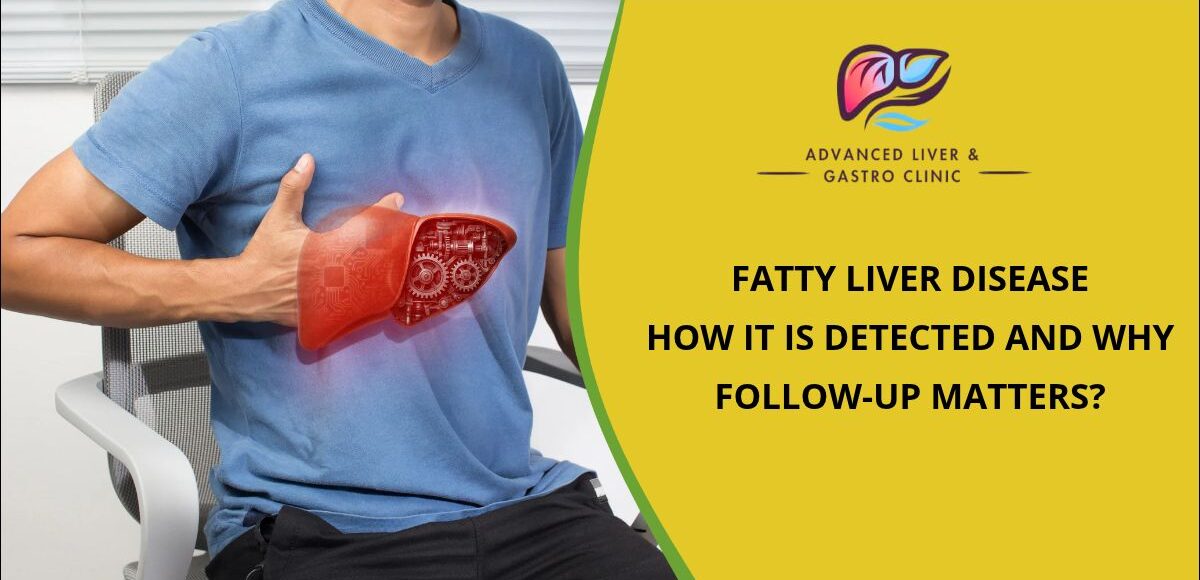
Fatty Liver Disease: How It Is Detected and Why Follow-Up Matters
Fatty liver disease is common, and many people first hear about it from a routine ultrasound report that says “grade 1 fatty liver”. The finding often comes without pain or any other warning, which makes it easy to ignore. This guide explains how the condition is detected, what the tests show and why follow-up visits matter. It is general information and does not replace a medical consultation.
What Is Fatty Liver Disease?
Fatty liver disease, also called hepatic steatosis, means that extra fat has collected inside liver cells. A small amount of fat in the liver is normal. When the amount rises above that level, the liver may become inflamed, and over a long period this can lead to scarring. You can read an overview on our page about fatty liver treatment in Pune.
Two Main Forms
- Non-alcoholic fatty liver disease: seen in people who drink little or no alcohol. It is often linked with excess weight, type 2 diabetes, high cholesterol and high blood pressure.
- Alcohol-related fatty liver disease: linked with regular, heavy alcohol intake over time.
Some people have features of both. Our article on alcoholic and non-alcoholic fatty liver disease explains the difference in more detail.
Who May Be at Higher Risk?
- Excess weight, especially around the abdomen
- Type 2 diabetes or raised blood sugar
- High cholesterol or triglycerides
- High blood pressure
- Regular alcohol intake
- A family history of liver disease
- Long periods of inactivity
Having one or more of these factors does not mean you will develop the condition. It means a liver check may be worth discussing with your doctor.
Symptoms: Why the Condition Is Often Missed
In the early stage there may be no symptoms at all. When symptoms do appear, they can be vague and may include:
- Tiredness
- A feeling of fullness or mild discomfort in the upper right abdomen
- Unexplained weight changes
Yellowing of the eyes or skin, swelling of the abdomen or legs, dark urine or black stools are not typical of early fatty liver. They need prompt medical attention. You can read about signs of liver damage on our blog.
How Fatty Liver Disease Is Detected
There is no single test that answers every question. Doctors usually combine your history, an examination and a few investigations.
1. Medical History and Examination
Your doctor will ask about your weight, diet, alcohol use, medicines, diabetes and family history. The abdomen is examined for liver enlargement or tenderness.
2. Blood Tests
Liver function tests such as ALT and AST show whether liver cells are irritated. Your doctor may also check blood sugar, HbA1c, cholesterol and triglycerides. Tests for hepatitis B and C are sometimes added to rule out other causes. Normal enzyme levels do not completely rule out fatty liver, which is why imaging is often needed.
3. Ultrasound of the Abdomen
Ultrasound is widely available and often the first imaging test. It can show a bright, fat-filled liver. It is less useful for judging how much scarring is present.
4. FibroScan or Liver Elastography
These are non-invasive tests that measure liver stiffness, which can point towards scarring (fibrosis), and also estimate the amount of fat. No needle or cut is involved. Dr. Ujwal Zambare’s website describes FibroScan in Wakad and liver elastography. Whether either test is suitable for you is a decision for your doctor.
5. Other Tests
In selected cases, a CT scan, an MRI or a liver biopsy may be advised when the diagnosis is unclear or when more detail on inflammation or scarring is needed.
Why Follow-Up Matters
A fatty liver finding is not a one-time event. The condition can stay stable, improve or progress, and only repeat assessment shows which way it is going. Follow-up is useful because:
- It tracks changes in liver enzymes and liver stiffness over time.
- It allows your doctor to review related conditions such as diabetes, cholesterol and blood pressure.
- It helps identify early scarring so that a plan can be made in good time.
- It gives you a chance to discuss diet, activity and alcohol in a practical way.
- It can show whether the steps you have taken are making a difference.
Everyday Steps Your Doctor May Discuss
- Gradual weight loss rather than crash diets
- A balanced diet with vegetables, fruit, whole grains and limited sugary drinks and fried food
- Regular physical activity that suits your age and health
- Limiting or stopping alcohol, as advised
- Careful control of diabetes, cholesterol and blood pressure
- Avoiding self-medication, including herbal products, without medical advice
These measures support liver health, but outcomes vary between individuals. No lifestyle change can promise a particular result, so your plan should be reviewed regularly.
When to See a Doctor Soon
- Persistent pain or discomfort in the upper right abdomen
- Yellowing of the eyes or skin
- Swelling of the abdomen or legs
- Vomiting blood or black stools
- Unexplained weight loss or constant tiredness
Frequently Asked Questions
Can fatty liver disease be present without any symptoms?
Yes. Many people have no symptoms in the early stages, and the condition is often found by chance during an ultrasound or a blood test done for another reason.
Is an ultrasound enough to check for fatty liver?
An ultrasound can show fat in the liver, but it does not measure scarring well. Your doctor may suggest blood tests or a liver stiffness test such as FibroScan to get a fuller picture.
What is the difference between fatty liver and cirrhosis?
Fatty liver means extra fat has built up in liver cells. Cirrhosis is severe scarring of the liver. Fatty liver can sometimes progress to scarring over time, which is why follow-up is advised.
How often should I go for follow-up?
The interval depends on your test results, your weight, your blood sugar and cholesterol levels, and your alcohol use. Your doctor will set a follow-up plan that fits your situation.
Can lifestyle changes help with fatty liver?
Gradual weight loss, a balanced diet, regular physical activity and avoiding alcohol are commonly advised. Results differ from person to person, so these steps should be planned with your doctor.
Does fatty liver only affect people who drink alcohol?
No. Fatty liver can occur in people who drink little or no alcohol, and it is often linked with obesity, diabetes, high cholesterol and high blood pressure.
Consult Dr. Ujwal Zambare in Wakad, Pune
If you have been told that you have a fatty liver or you are unsure what your report means, you can discuss it with Dr. Ujwal Zambare (DNB Surgical Gastroenterology, MS General Surgery, MBBS). Read more about Dr. Ujwal Zambare or visit the contact page.
- Address: Shop No. 115, 1st Floor, Westwood Estates, opp. Mont Vert Tropez Road, Kaspate Wasti, Wakad, Pune, Pimpri-Chinchwad, Maharashtra 411057
- Phone: 9552748080
This article is for general information only. It is not a diagnosis or a substitute for advice from a qualified doctor. Please consult a doctor about your own symptoms and test results.
Leave a Comment